
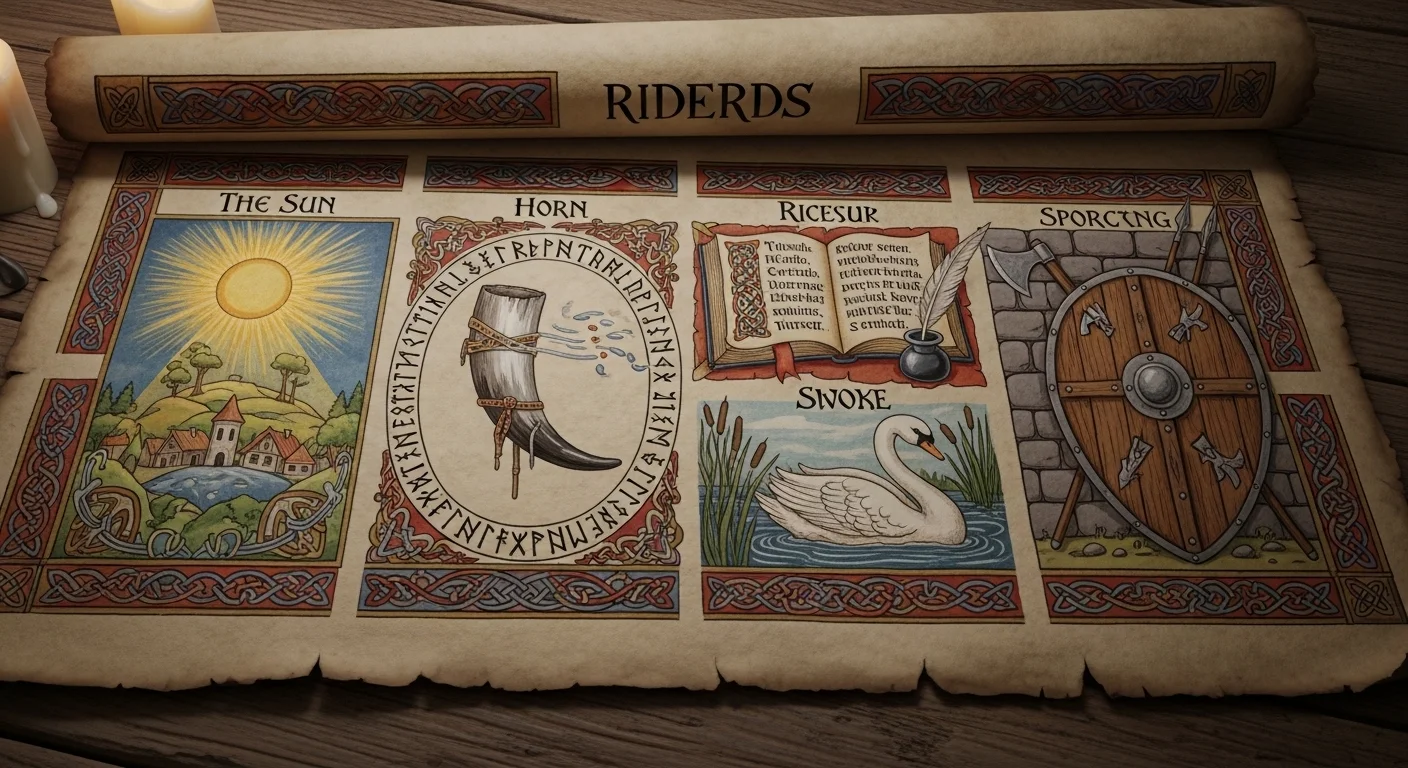
💡 Did You Know?
• Anglo-Saxon riddles helped train memory, logic, and creative thinking long before modern classrooms existed.
• Many famous riddles come from the Exeter Book, written over a thousand years ago and still studied today.
🎯 Riddle of the Day
I speak without breath and travel without feet
I live in your mind yet vanish when we meet
Older than ink but younger than thought
Can you guess the answer? Comment below!
🛡️ Ancient Voices from the Mead Hall
What sings without a mouth and teaches without a tongue? 👉 A written poem
What stands in battle yet never lifts a sword? 👉 A shield
What drinks without thirst and eats without hunger? 👉 Fire
What guards a warrior yet feels every blow? 👉 Armor
What travels with a king but owns no land? 👉 His reputation
What is born in silence and dies in sound? 👉 A secret
What shines in halls but fears the night sky? 👉 A torch
What binds men together stronger than iron? 👉 An oath
📜 Monks, Manuscripts, and Clever Minds
What carries words yet cannot speak? 👉 Parchment
What bleeds to give knowledge? 👉 Ink
What sleeps by day and wakes by candlelight? 👉 A manuscript
What grows wiser the more it is read? 👉 A book
What travels far while never leaving the desk? 👉 A letter
What holds many voices but has one skin? 👉 A codex
What teaches the young without knowing their names? 👉 A lesson
What is silent until the mind opens it? 👉 Writing
⚔️ Riddles of War and Warrior Life
What screams when struck but feels no pain? 👉 A sword
What bites without teeth and drinks red wine? 👉 A spear
What stands firm yet bends in battle? 👉 A shield wall
What marches without legs across the land? 👉 An army
What protects the brave yet weighs them down? 👉 Chainmail
What wins wars without drawing blood? 👉 Strategy
What is sharper than steel and deadlier than blows? 👉 Courage
What follows warriors home after the fight? 👉 Memory
🐑 Life in Fields, Farms, and Villages
What feeds many but never eats? 👉 Soil
What grows tall yet bows to the wind? 👉 Grain
What sings in morning yet owns no songbook? 👉 A rooster
What walks on four legs by day and rests on none by night? 👉 A table
What is cut yet never bleeds? 👉 Grass
What gives wool yet keeps its coat? 👉 A sheep
What turns earth upside down without hands? 👉 A plow
What works from dawn to dusk without wages? 👉 An ox
🌊 Sea, Storms, and Northern Winds
What roars without a mouth and strikes without fists? 👉 A storm
What carries men yet never sleeps? 👉 The sea
What has teeth but never chews? 👉 Waves
What steals ships yet leaves no footprints? 👉 Fog
What sings sailors to sleep then wakes them in fear? 👉 The wind
What road has no stones and no end? 👉 The ocean
What guides travelers yet cannot move? 👉 A star
What swallows light and spits out foam? 👉 A wave crest
🏡 Hearth, Home, and Daily Life
What warms the house but fears the rain? 👉 Fire
What holds a family yet has no arms? 👉 A house
What smells of stories and tastes of time? 👉 Bread
What listens all night yet never speaks? 👉 A wall
What opens mouths and closes arguments? 👉 Food
What spins without wheels by the hearth? 👉 Yarn
What guards sleep better than a lock? 👉 A door
What carries memories in every crack? 👉 A table
🐦 Animals in Anglo-Saxon Imagination
What flies by day and hunts by night? 👉 An owl
What wears a crown yet rules no land? 👉 A stag
What sings sweetly yet steals your crumbs? 👉 A sparrow
What guards gold better than men? 👉 A dragon
What walks softly yet speaks loudly at dawn? 👉 A bird
What runs without roads across the hills? 👉 A deer
What fears fire yet loves warmth? 👉 A cat
What howls stories to the moon? 👉 A wolf
✍️ Wordplay and Wisdom Riddles
What grows richer the more you give away? 👉 Knowledge
What can wound without touch? 👉 Words
What hides truth inside lies? 👉 A riddle
What travels faster than feet? 👉 Thought
What weighs nothing yet burdens many? 👉 Guilt
What is sharp without edges? 👉 Wit
What lives only when shared? 👉 A story
What teaches best by asking? 👉 A question
🌒 Dark Humor and Hidden Meanings
What laughs in daylight and cries at night? 👉 A shadow
What eats all yet starves itself? 👉 Time
What dies every day yet is never buried? 👉 The sun
What follows you but leaves when chased? 👉 Darkness
What speaks truth by lying? 👉 Irony
What hides fear behind smiles? 👉 Bravery
What steals youth but gives wisdom? 👉 Age
What breaks without sound? 👉 Silence
🧠 Learning Through Ancient Riddles
What sharpens the mind without a blade? 👉 A puzzle
What teaches patience by confusion? 👉 A riddle
What trains memory through play? 👉 Verse
What makes learning feel like fun? 👉 Curiosity
What connects past minds to present ones? 👉 Language
What challenges without judging? 👉 A question
What rewards effort with joy? 👉 Understanding
What turns mistakes into lessons? 👉 Thought